
Expanding Where Wind Power Works
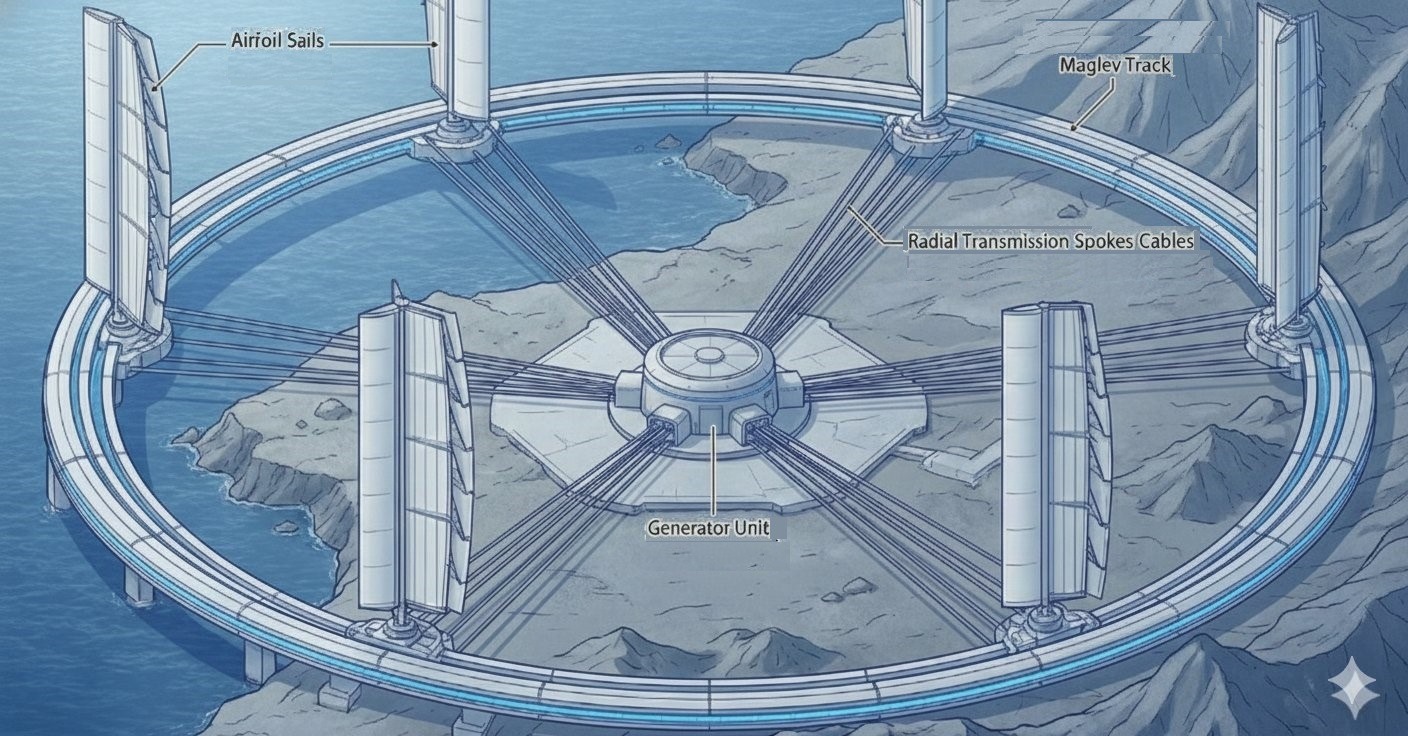
Ring-Track Wind Energy Platform
Built for Sites Conventional Wind Falls Short
🎯 Key Takeaways
HAWT is the proven architecture for mainstream wind corridors
Ring-Track VAWT is designed for tougher, underserved wind environments
Our goal is not to replace every HAWT, but to unlock sites that conventional wind leaves behind.
Why Ring-Track VAWT Platform
A strategic alternative for sites where conventional wind systems are harder to deploy, maintain, or make economically viable.
Conventional HAWT systems perform well in large, open, and stable wind corridors. Our Ring-Track VAWT platform is designed for constrained, maintenance-sensitive, and turbulent wind environments where a different architecture offers practical advantages.
Ring-Track VAWT Platform Conventional HAWT
Low-profile, modular wind architecture Mature mainstream architecture
Ground-accessible or protected maintenance approach Strong fit for large, stable wind corridors
Designed for constrained and maintenance-sensitive sites Tall-tower installation and elevated maintenance
Better aligned with turbulent, gusty, and multi-directional wind environments Best suited for standardized utility-scale deployment
Supports staged validation and modular scale-up Backed by established supply chains
Built to expand where wind power works Optimized for conventional project environments
Innovation
Leading advancements in engineering and defense.
Contact
Support
+1-800-555-0199
© 2025. All rights reserved.